
At Revolution Cycle Sport, we’re often asked whether going tubeless is worth it, what equipment is required, and what riders need to carry on the road or trail. In this guide, we’ll break down the pros and cons of tubeless setups, explain the components you need, and help you decide whether tubeless is right for your riding.
Tubeless tyres have become increasingly popular across road, gravel and mountain biking — and for good reason. Riders looking for improved comfort, better puncture protection and increased performance are making the switch in growing numbers.
But while tubeless technology offers plenty of benefits, it’s not always the perfect solution for every cyclist. Like most upgrades in cycling, there are compromises to consider alongside the advantages.
What Does “Tubeless” Actually Mean?
A tubeless setup removes the inner tube entirely. Instead, the tyre creates an airtight seal directly against the wheel rim, with liquid sealant inside the tyre helping maintain pressure and automatically sealing small punctures.
While the concept sounds simple, tubeless systems rely on compatible components working together correctly.
The Benefits of Going Tubeless
1. Improved Puncture Resistance
One of the biggest advantages of tubeless tyres is their ability to self-seal small punctures.
When debris penetrates the tyre, the sealant inside reacts instantly to plug the hole — often before you even realise you’ve punctured. For many riders, this means fewer roadside stops and greater reliability over long distances.
2. Lower Tyre Pressures
Without an inner tube, you can safely run lower tyre pressures, reducing the risk of pinch punctures.
Lower pressures can provide:
- Better grip
- Improved comfort
- More confidence in corners
- Reduced rider fatigue on rough surfaces
This is particularly noticeable on gravel bikes and mountain bikes, but road riders also benefit from smoother rolling and increased comfort.
3. Reduced Rolling Resistance
Modern research has shown that tubeless tyres can reduce rolling resistance compared to traditional inner tube setups.
The reduction in friction between tyre and tube allows the tyre to deform more efficiently over road imperfections, helping maintain momentum and improve ride quality.
4. Better Ride Feel
Many riders describe tubeless setups as feeling smoother, more planted and more controlled — especially over rough roads or uneven terrain.
Combined with lower pressures, the overall ride experience can feel noticeably more refined.
The Arguments Against Tubeless
Tubeless isn’t perfect, and it’s important to understand the drawbacks before making the switch.
1. More Complicated Setup
Compared to simply fitting an inner tube, tubeless installation can be messy and time-consuming.
Proper rim taping, sealant installation and tyre seating all need to be done correctly to ensure reliable performance.
Some tyre and rim combinations can also be tighter and more difficult to fit than others.
2. Ongoing Maintenance
Tubeless systems require periodic maintenance.
Sealant dries out over time and usually needs topping up every 2–6 months, depending on climate and riding conditions.
Ignoring maintenance can lead to dried sealant, poor sealing performance and frustrating puncture issues.
3. Not Always Lighter
While removing an inner tube reduces weight, the addition of sealant and stronger tyre construction can offset some of the savings.
Weight differences between tubeless and lightweight tube setups are often smaller than many riders expect.
4. Large Punctures Can Still End Your Ride
Tubeless sealant works brilliantly on small punctures — but larger cuts or sidewall damage may not seal successfully.
In those situations, you’ll still need backup repair options or even a traditional inner tube to get home.
What Rims Do You Need for Tubeless?
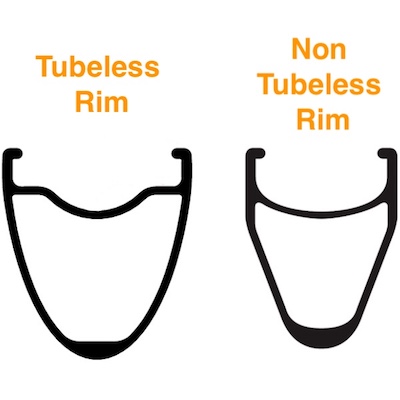
To run tubeless tyres safely, you’ll need tubeless-ready rims.
These rims are specifically designed with:
- Airtight rim beds
- Bead-lock profiles to help secure the tyre
- Compatibility with tubeless rim tape and valves
Most modern road, gravel and MTB wheels are now tubeless compatible, but older wheelsets may not be suitable.
If you’re unsure whether your wheels are tubeless-ready, check the manufacturer’s specifications or get in contact and discuss what you have.
What Tyres Do You Need?
You’ll also need tubeless-ready tyres.
Tubeless tyres feature:
- Airtight construction
- Reinforced beads
- Compatibility with tubeless sealant
Attempting to run standard clincher tyres tubeless is not recommended and can be unsafe.
When choosing tyres, consider:
- Riding discipline (road, gravel, MTB)
- Tyre width
- Rolling resistance
- Puncture protection
- Wet and dry grip performance
What Equipment Do You You Need?
See this additional blog for a detailed guide, but to convert to tubeless, you’ll need the following:
- Tubeless-ready wheels
- Tubeless-ready tyres
- Tubeless rim tape*
- Tubeless valves
- Tubeless sealant
- Tyre levers
- Track pump or tubeless inflator pump
Optional but useful:
- Valve core remover
- Sealant injector
- Air compressor
- Tyre seating strap (old school DIY hack!)
What Extra Tools Should You Carry While Riding?
One common misconception is that tubeless setups mean you no longer need to carry repair equipment.
In reality, you should still carry a few essentials in case a puncture cannot be sealed automatically.
Recommended Tubeless Ride Kit
1. Spare Inner Tube
Even with tubeless tyres, carrying a spare tube is strongly recommended for larger punctures or damaged tyres.
2. Tyre Plugs
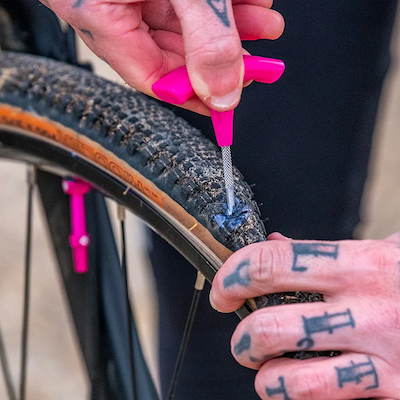
Tubeless repair plugs (sometimes called bacon strips) are designed to repair larger holes that sealant alone cannot handle.
They’re lightweight, compact and extremely useful – they may make the difference between sealing a larger hole or having to abort and put in an inner tube, or worse, call a taxi! (See image below)
3. CO2 Inflator or Mini Pump
After a repair, you’ll need enough air volume to properly re-inflate the tyre.
CO2 inflators are fast, high volume and compact but only work once, while mini pumps offer unlimited inflation without cartridges. Also consider a mini electric pump as a hybrid option.
4. Tyre Levers
Useful for removing stubborn tyres if you need to fit an emergency inner tube, and can avoid rim damage.
5. Valve Core Tool
A small valve core remover makes sealant top-ups and repairs much easier. Available as a valve cap so barely noticeable!
6. Gloves or Paper Towel
Sealant can get messy during roadside repairs, consider a small hand wipe or a pair of disposable gloves.
Is Tubeless Worth It?
For many cyclists, absolutely.
If you regularly ride rough roads, gravel, long distances or simply want fewer punctures and improved comfort, tubeless can be a fantastic upgrade.
However, riders who prioritise simplicity, minimal maintenance or ultra-lightweight setups may still prefer traditional inner tubes.
Ultimately, the best setup depends on:
- Your riding style
- Terrain
- Mechanical confidence
- Performance priorities
Need Help Choosing a Tubeless Setup?
At Revolution Cycle Sport, we can help you choose the right wheels, tyres and setup for your riding goals.
We use Muc Off products – rim tape, valves, tyre plugs, pumps. We also use Muc Off sealant, which is excellent, and it’s biodegradable, which we feel is important for a product that leaks into the environment.
Whether you’re considering your first tubeless conversion or looking to optimise an existing setup, we are here to help you ride faster, smoother and with more confidence.